Kembali ke Katalog
Smart Stick IoT-based flood and air pollution detector
Oleh: Rafiuddin Syam, S.T., M.Eng., Ph.D., DKK.
HKI No:
Poster
Poster tidak tersedia
Foto Alat
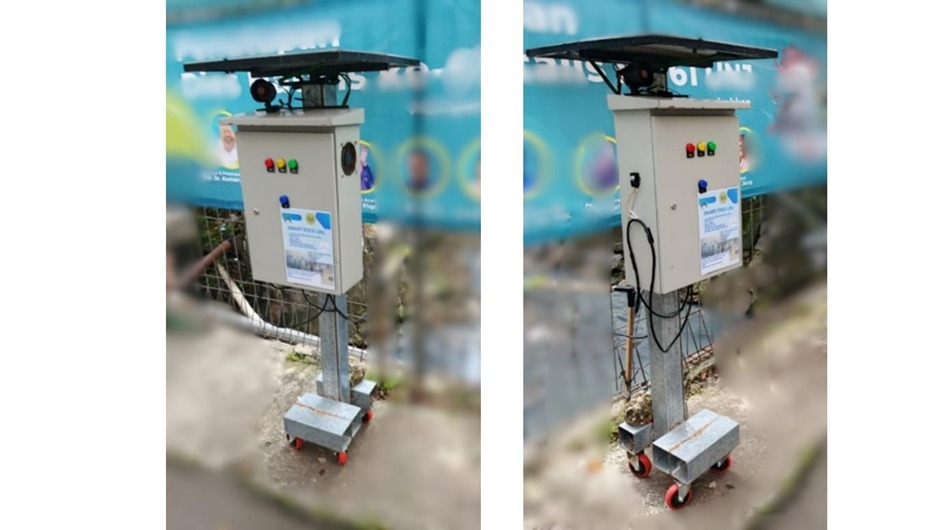
Penjelasan Alat
An IoT-based Flood and Air Pollution Detection System is a tool designed to monitor environmental conditions in real time, especially water levels and air quality. This tool uses an ultrasonic sensor to measure water height, as well as an MQ-135 sensor to detect air pollution levels. All data is sent to the IoT platform (Blynk) via the Wi-Fi network, so that users can monitor environmental conditions remotely using a smartphone. Helping the community and related agencies in carrying out early monitoring of potential floods and air pollution so that preventive measures can be taken immediately. Apart from that, this tool is aimed at educating pupils and students in the application of Internet of Things (IoT) technology in the environmental sector. Flooding and air pollution are two main problems in urban areas in Indonesia. The lack of a real-time monitoring system causes delays in information for the public and government. With this tool, environmental data can be sent directly to the cloud and displayed on smartphones, thereby improving disaster preparedness and environmental health.1. IoT-based remote monitoring via smartphone.2. Can be used in various locations with a simple internet connection.3. Low power consumption and easy maintenance.4. Using components that are economical and easy to find on the market.5. Can be expanded with additional sensors such as temperature, humidity and rainfall. The tool is installed in areas prone to flooding or with heavy air traffic. The ultrasonic sensor is placed above the water surface to read the distance of the water to the device, while the MQ-135 sensor is placed in the open position to detect pollutant gases. Once connected to a Wi-Fi network, NodeMCU will send data to the Blynk platform. Users can monitor the reading results via the Blynk application on their smartphone. NodeMCU ESP8266 as a control center receives data from ultrasonic sensors (water level) and MQ-135 sensors (air quality). The microcontroller processes the data, displays the results on the LCD screen, and sends them to the Blynk application via a Wi-Fi connection. If the water level exceeds the limit or the air is detected to be polluted, the system will activate a buzzer as a local warning and a notification appears in the user's application. This product answers the need for an environmental monitoring system that is efficient and easy to access. With the integration of IoT technology, this tool can automatically send water and air condition data to the user's device. This allows the public and authorities to act quickly in anticipating flood disasters and controlling air pollution levels.